
1
0
Support the library.
Your support helps keep books free for everyone ❤️
📍 Noticed
We Refuse: A Forceful History of Black Resistance
by Kellie Carter Jackson
Sponsored
Synopsis
A radical reframing of the past and present of Black resistance—both nonviolent and violent—to white supremacy.Black resistance to white supremacy is often reduced to a simple binary, between Dr. Martin Luther King Jr.’s nonviolence and Malcolm X’s “by any means ...
A radical reframing of the past and present of Black resistance—both nonviolent and violent—to white supremacy.
Black resistance to white supremacy is often reduced to a simple binary, between Dr. Martin Luther King Jr.’s nonviolence and Malcolm X’s “by any means necessary.” In We Refuse, historian Kellie Carter Jackson urges us to move past this false choice, offering an unflinching examination of the breadth of Black responses to white oppression, particularly those pioneered by Black women.
The dismissal of “Black violence” as an illegitimate form of resistance is itself a manifestation of white supremacy, a distraction from the insidious, unrelenting violence of structural racism. Force—from work stoppages and property destruction to armed revolt—has played a pivotal part in securing freedom and justice for Black people since the days of the American and Haitian Revolutions. But violence is only one tool among many.
Carter Jackson examines other, no less vital tactics that have shaped the Black struggle, from the restorative power of finding joy in the face of suffering to the quiet strength of simply walking away. Clear-eyed, impassioned, and ultimately hopeful, We Refuse offers a fundamental corrective to the historical record, a love letter to Black resilience, and a path toward liberation.
Black resistance to white supremacy is often reduced to a simple binary, between Dr. Martin Luther King Jr.’s nonviolence and Malcolm X’s “by any means necessary.” In We Refuse, historian Kellie Carter Jackson urges us to move past this false choice, offering an unflinching examination of the breadth of Black responses to white oppression, particularly those pioneered by Black women.
The dismissal of “Black violence” as an illegitimate form of resistance is itself a manifestation of white supremacy, a distraction from the insidious, unrelenting violence of structural racism. Force—from work stoppages and property destruction to armed revolt—has played a pivotal part in securing freedom and justice for Black people since the days of the American and Haitian Revolutions. But violence is only one tool among many.
Carter Jackson examines other, no less vital tactics that have shaped the Black struggle, from the restorative power of finding joy in the face of suffering to the quiet strength of simply walking away. Clear-eyed, impassioned, and ultimately hopeful, We Refuse offers a fundamental corrective to the historical record, a love letter to Black resilience, and a path toward liberation.
You May Also Like





Psychology Picks
View All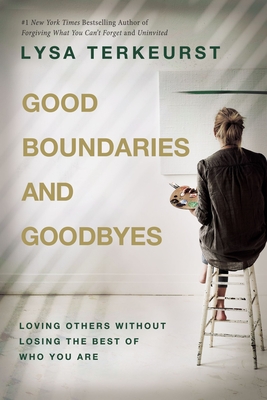
Good Boundaries and Goodbyes: Loving Others Without Losing the Best of Who You Are
Lysa TerKeurst

The Next Conversation: Argue Less, Talk More
Jefferson Fisher

Never Finished: Unshackle Your Mind and Win the War Within
David Goggins

The Sirens' Call: How Attention Became the World's Most Endangered Resource
Christopher L. Hayes

Why Has Nobody Told Me This Before?
Julie Smith

Stella Maris
Cormac McCarthy
