19
0
Support the library.
Your support helps keep books free for everyone ❤️
📍 Noticed
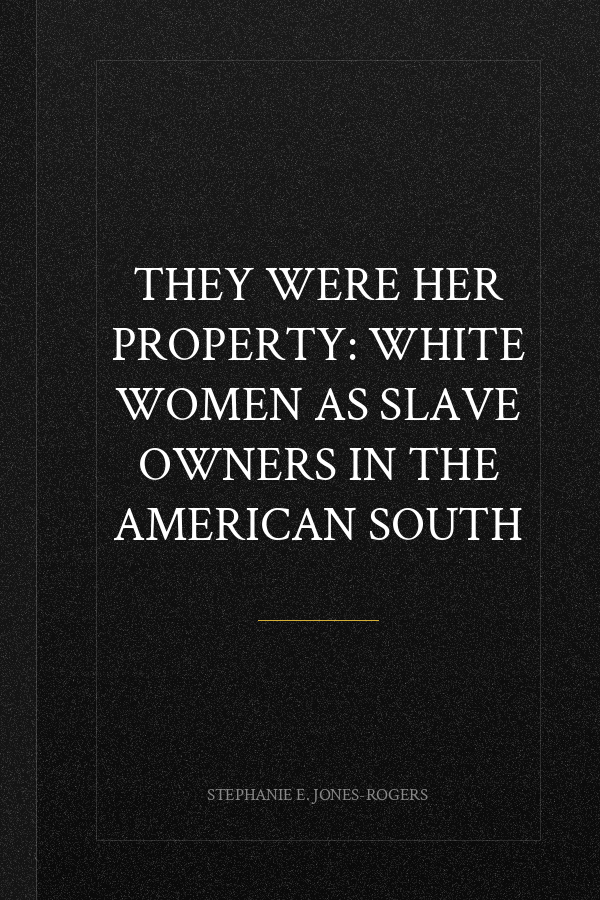
They Were Her Property: White Women as Slave Owners in the American South
by Stephanie E. Jones-Rogers
Sponsored
Synopsis
A bold and searing investigation into the role of white women in the American slave economy Bridging women’s history, the history of the South, and African American history, this book makes a bold argument about the role of white women in American slavery. Historian Stephanie ...
A bold and searing investigation into the role of white women in the American slave economy
Bridging women’s history, the history of the South, and African American history, this book makes a bold argument about the role of white women in American slavery. Historian Stephanie E. Jones-Rogers draws on a variety of sources to show that slave-owning women were sophisticated economic actors who directly engaged in and benefited from the South’s slave market. Because women typically inherited more slaves than land, enslaved people were often their primary source of wealth. Not only did white women often refuse to cede ownership of their slaves to their husbands, they employed management techniques that were as effective and brutal as those used by slave-owning men. White women actively participated in the slave market, profited from it, and used it for economic and social empowerment. By examining the economically entangled lives of enslaved people and slave-owning women, Jones-Rogers presents a narrative that forces us to rethink the economics and social conventions of slaveholding America.
Bridging women’s history, the history of the South, and African American history, this book makes a bold argument about the role of white women in American slavery. Historian Stephanie E. Jones-Rogers draws on a variety of sources to show that slave-owning women were sophisticated economic actors who directly engaged in and benefited from the South’s slave market. Because women typically inherited more slaves than land, enslaved people were often their primary source of wealth. Not only did white women often refuse to cede ownership of their slaves to their husbands, they employed management techniques that were as effective and brutal as those used by slave-owning men. White women actively participated in the slave market, profited from it, and used it for economic and social empowerment. By examining the economically entangled lives of enslaved people and slave-owning women, Jones-Rogers presents a narrative that forces us to rethink the economics and social conventions of slaveholding America.
You May Also Like

Her Cold Justice (Keera Duggan)
Robert Dugoni
An Unlikely Social Justice Warrior: Making My Life Count as a Muslim Feminist (Queer and LGBT+ Studies)
Ani Zonneveld

The Hot Shot
Kristen Callihan

Master the Catholic High School Entrance Exams 2021
Peterson's

Fiona, Love at the Zoo (A Fiona the Hippo Book)
Richard Cowdrey

Sculptor's Daughter
Tove Jansson
Business Picks
View All
Supremacy: AI, ChatGPT, and the Race That Will Change the World
Parmy Olson

The Creative Act: A Way of Being
Rick Rubin
Enshittification: Why Everything Suddenly Got Worse and What to Do About It
Cory Doctorow

Abundance
Ezra Klein

Press Reset: Ruin and Recovery in the Video Game Industry
Jason Schreier

Stop Overthinking: 23 Techniques to Relieve Stress, Stop Negative Spirals, Declutter Your Mind, and Focus on the Present
Nick Trenton
