
2
0
Sponsored
Synopsis
The Paris Commune as a world revolutionary event that crossed from Paris to Algeria and then New York and was the laboratory for all the republican and socialist ideas of a centuryFrom 1871, this book shows, the Paris Commune (March-May 1871) was a global event. The Parisian ...
The Paris Commune as a world revolutionary event that crossed from Paris to Algeria and then New York and was the laboratory for all the republican and socialist ideas of a century
From 1871, this book shows, the Paris Commune (March-May 1871) was a global event. The Parisian revolution was quickly appropriated in Europe and beyond, from Mexico City to Algiers, bringing together the many voices of ‘global radicalism’ of the time. Combining history, anthropology and the sociology of crises and revolutions, Quentin Deluermoz also follows the revolution in the making, on the Parisian street corner, from the perspective of ordinary men and women. And it takes up the old and terribly delicate question, in the century of ‘modernity’, of its temporalities, both short and long, continuous and discontinuous.
References to the Paris Commune (March-May 1871) have resurfaced over the last twenty years in a number of social and political struggles in France, the United States, Spain, Mexico and in Rojava. This resurgence has its roots in the long imperial and global history of the twentieth century, particularly anarchist and communist history. But it also comes from further back and refers to sometimes forgotten meanings of socialism, federalism and republicanism . Continuing the immense work carried out over more than 150 years, this book restores in a new way the intensity of the ‘Commune moment’, and provides tools for understanding its enduring relevance in today's world.
From 1871, this book shows, the Paris Commune (March-May 1871) was a global event. The Parisian revolution was quickly appropriated in Europe and beyond, from Mexico City to Algiers, bringing together the many voices of ‘global radicalism’ of the time. Combining history, anthropology and the sociology of crises and revolutions, Quentin Deluermoz also follows the revolution in the making, on the Parisian street corner, from the perspective of ordinary men and women. And it takes up the old and terribly delicate question, in the century of ‘modernity’, of its temporalities, both short and long, continuous and discontinuous.
References to the Paris Commune (March-May 1871) have resurfaced over the last twenty years in a number of social and political struggles in France, the United States, Spain, Mexico and in Rojava. This resurgence has its roots in the long imperial and global history of the twentieth century, particularly anarchist and communist history. But it also comes from further back and refers to sometimes forgotten meanings of socialism, federalism and republicanism . Continuing the immense work carried out over more than 150 years, this book restores in a new way the intensity of the ‘Commune moment’, and provides tools for understanding its enduring relevance in today's world.
You May Also Like
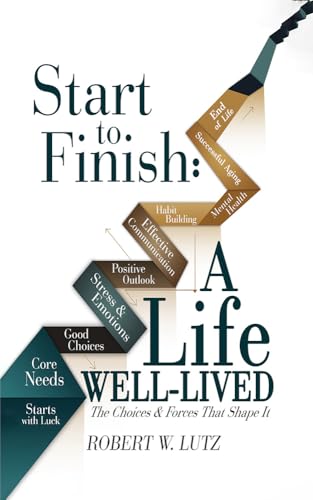
Start To Finish: A Life Well-Lived: The Choices and Forces That Shape It
Robert Lutz

Oz: Ozma of Oz
Eric Shanower

A Court of Thorns and Roses Coloring Book
Sarah J. Maas

Rees Howells: Intercessor
Norman P. Grubb
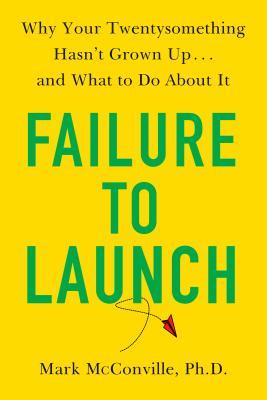
Failure to Launch: Why Your Twentysomething Hasn't Grown Up...and What to Do About It
Mark McConville

Her Mountain Man Grinch (Crave County: Mountain Men Love Curves)
Clara King
Biography Picks
View All
John Candy: A Life in Comedy
Paul Myers

King of Kings: The Iranian Revolution—A Story of Hubris, Delusion and Catastrophic Miscalculation
Scott Anderson

Choosing to Run: A Memoir
Des Linden

The Einstein Vendetta: Hitler, Mussolini, and a True Story of Murder
Thomas Harding

The Season
Helen Garner

Kolkhoze
Emmanuel Carrère
