3
0
Support the library.
Your support helps keep books free for everyone ❤️
📍 Noticed
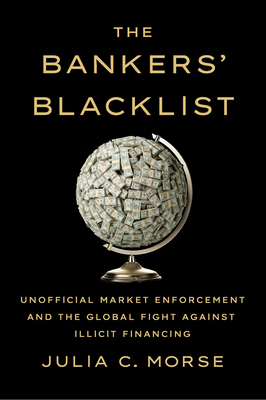
The Bankers' Blacklist: Unofficial Market Enforcement and the Global Fight against Illicit Financing (Cornell Studies in Money)
by Julia C Morse
Sponsored
Synopsis
In The Banker's Blacklist, Julia C. Morse demonstrates how the Financial Action Task Force (FATF) has enlisted global banks in the effort to keep bad money out of the financial system, in the process drastically altering the domestic policy landscape and transforming ...
In The Banker's Blacklist, Julia C. Morse demonstrates how the Financial Action Task Force (FATF) has enlisted global banks in the effort to keep bad money out of the financial system, in the process drastically altering the domestic policy landscape and transforming banking worldwide.
Trillions of dollars flow across borders through the banking system every day. While bank-to-bank transfers facilitate trade and investment, they also provide opportunities for criminals and terrorists to move money around the globe. To address this vulnerability, large economies work together through an international standard-setting body, the FATF, to shift laws and regulations on combating illicit financial flows. Morse examines how this international organization has achieved such impact, arguing that it relies on the power of unofficial market enforcement--a process whereby market actors punish countries that fail to meet international standards. The FATF produces a public noncomplier list, which banks around the world use to shift resources and services away from listed countries. As banks restrict cross-border lending, the domestic banking sector in listed countries advocates strongly for new laws and regulations, ultimately leading to deep and significant compliance improvements.
The Bankers' Blacklist offers lessons about the peril and power of globalized finance, revealing new insights into how some of today's most pressing international cooperation challenges might be addressed.
Trillions of dollars flow across borders through the banking system every day. While bank-to-bank transfers facilitate trade and investment, they also provide opportunities for criminals and terrorists to move money around the globe. To address this vulnerability, large economies work together through an international standard-setting body, the FATF, to shift laws and regulations on combating illicit financial flows. Morse examines how this international organization has achieved such impact, arguing that it relies on the power of unofficial market enforcement--a process whereby market actors punish countries that fail to meet international standards. The FATF produces a public noncomplier list, which banks around the world use to shift resources and services away from listed countries. As banks restrict cross-border lending, the domestic banking sector in listed countries advocates strongly for new laws and regulations, ultimately leading to deep and significant compliance improvements.
The Bankers' Blacklist offers lessons about the peril and power of globalized finance, revealing new insights into how some of today's most pressing international cooperation challenges might be addressed.
You May Also Like
The Green Tech Revolution: Sustainable Innovation for a Digital Future: Eco-Friendly Solutions for Net-Zero Tech: Tools, Strategies, and Insights for All (Technology Books Book 2)
Jim Capler

The Silence in Her Eyes
Armando Lucas Correa

The Singular Life of Aria Patel
Samira Ahmed

The Gift
Danielle Steel

Why We Swim
Bonnie Tsui

The Message of Proverbs (The Bible Speaks Today Series)
David John Atkinson