3
0
Support the library.
Your support helps keep books free for everyone ❤️
📍 Noticed
Perspective as Symbolic Form
by Erwin Panofsky
Sponsored
Synopsis
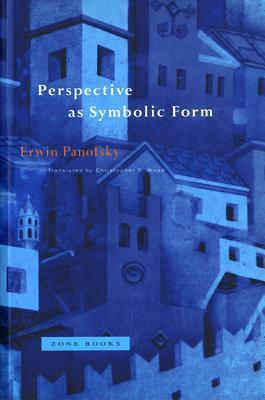
Erwin Panofsky’s Perspective as Symbolic Form is one of the great works of modern intellectual history, the legendary text that has dominated all art-historical and philosophical discussions on the topic of perspective in this century. Finally available in English, this unrivaled example of ...
Erwin Panofsky’s Perspective as Symbolic Form is one of the great works of modern intellectual history, the legendary text that has dominated all art-historical and philosophical discussions on the topic of perspective in this century. Finally available in English, this unrivaled example of Panofsky’s early method places him within broader developments in theories of knowledge and cultural change.
Here, drawing on a massive body of learning that ranges over ancient philosophy, theology, science, and optics as well as the history of art, Panofsky produces a type of “archaeology” of Western representation that far surpasses the usual scope of art historical studies.
Perspective in Panofsky’s hands becomes a central component of a Western “will to form,” the expression of a schema linking the social, cognitive, psychological, and especially technical practices of a given culture into harmonious and integrated wholes. He demonstrates how the perceptual schema of each historical culture or epoch is unique and how each gives rise to a different but equally full vision of the world.
Panofsky articulates these distinct spatial systems, explicating their particular coherence and compatibility with the modes of knowledge, belief, and exchange that characterized the cultures in which they arose. Our own modernity, Panofsky shows, is inseparable from its peculiarly mathematical expression of the concept of the infinite, within a space that is both continuous and homogenous.
Here, drawing on a massive body of learning that ranges over ancient philosophy, theology, science, and optics as well as the history of art, Panofsky produces a type of “archaeology” of Western representation that far surpasses the usual scope of art historical studies.
Perspective in Panofsky’s hands becomes a central component of a Western “will to form,” the expression of a schema linking the social, cognitive, psychological, and especially technical practices of a given culture into harmonious and integrated wholes. He demonstrates how the perceptual schema of each historical culture or epoch is unique and how each gives rise to a different but equally full vision of the world.
Panofsky articulates these distinct spatial systems, explicating their particular coherence and compatibility with the modes of knowledge, belief, and exchange that characterized the cultures in which they arose. Our own modernity, Panofsky shows, is inseparable from its peculiarly mathematical expression of the concept of the infinite, within a space that is both continuous and homogenous.
You May Also Like

Prey (Dark Monster Fantasy, #1)
Cari Silverwood

Écrits
Jacques Lacan

Hot Mess: A laugh-out-loud summer disaster from the #1 international bestselling Diary of a Wimpy Kid series (Book 19)
Jeff Kinney

The Big Short: by Michael Lewis
aBookaDay

Memorial
Bryan Washington

Temptation's Darling
Johanna Lindsey
Psychology Picks
View All
What Happened To You?: Conversations on Trauma, Resilience, and Healing
Bruce D. Perry

Never Finished: Unshackle Your Mind and Win the War Within
David Goggins

The Intimate Animal: The Science of Sex, Fidelity, and Why We Live and Die for Love
Justin R. Garcia

8 Rules of Love: How to Find It, Keep It, and Let It Go
Jay Shetty

More or Less Maddy
Lisa Genova

Moral Ambition: Stop Wasting Your Talent and Start Making a Difference
Rutger Bregman
