98
0
Support the library.
Your support helps keep books free for everyone ❤️
Sponsored
Synopsis
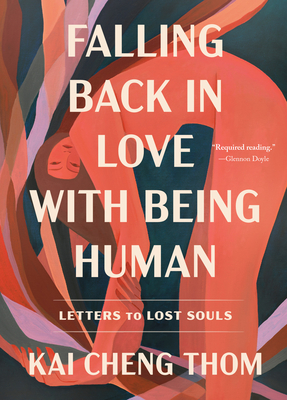
What happens when we imagine loving the people--and the parts of ourselves--that we do not believe are worthy of love?
A transformative collection of intimate and lyrical love letters that offer a path toward compassion, forgiveness, and self-acceptance.
...
A transformative collection of intimate and lyrical love letters that offer a path toward compassion, forgiveness, and self-acceptance.
...
What happens when we imagine loving the people--and the parts of ourselves--that we do not believe are worthy of love?
A transformative collection of intimate and lyrical love letters that offer a path toward compassion, forgiveness, and self-acceptance.
"Required reading."--Glennon Doyle
Kai Cheng Thom grew up a Chinese Canadian transgender girl in a hostile world. As an activist, psychotherapist, conflict mediator, and spiritual healer, she's always pursued the same deeply personal mission: to embrace the revolutionary belief that every human being, no matter how hateful or horrible, is intrinsically sacred.
But then Kai Cheng found herself in a crisis of faith, overwhelmed by the viciousness with which people treated one another, and barely clinging to the values and ideals she'd built her life around: justice, hope, love, and healing. Rather than succumb to despair and cynicism, she gathered all her rage and grief and took one last leap of faith: she wrote. Whether prayers or spells or poems--and whether there's a difference--she wrote to affirm the outcasts and runaways she calls her kin. She wrote to flawed but nonetheless lovable men, to people with good intentions who harm their own, to racists and transphobes seemingly beyond saving. What emerged was a blueprint for falling back in love with being human.
A transformative collection of intimate and lyrical love letters that offer a path toward compassion, forgiveness, and self-acceptance.
"Required reading."--Glennon Doyle
Kai Cheng Thom grew up a Chinese Canadian transgender girl in a hostile world. As an activist, psychotherapist, conflict mediator, and spiritual healer, she's always pursued the same deeply personal mission: to embrace the revolutionary belief that every human being, no matter how hateful or horrible, is intrinsically sacred.
But then Kai Cheng found herself in a crisis of faith, overwhelmed by the viciousness with which people treated one another, and barely clinging to the values and ideals she'd built her life around: justice, hope, love, and healing. Rather than succumb to despair and cynicism, she gathered all her rage and grief and took one last leap of faith: she wrote. Whether prayers or spells or poems--and whether there's a difference--she wrote to affirm the outcasts and runaways she calls her kin. She wrote to flawed but nonetheless lovable men, to people with good intentions who harm their own, to racists and transphobes seemingly beyond saving. What emerged was a blueprint for falling back in love with being human.
You May Also Like
Murder Bites: A Novel
Mimi Montgomery

Sidetracked (Mindf*ck Series Book 2)
S.T. Abby

Ruled Out (Seattle Scorpions Series Book 4)
Ruth Stilling
Fiddler on the Roof
Joseph Stein
Always Hope (Guardian Hall Book 2)
RJ Scott
Niedermeyer's Electroencephalography: Basic Principles, Clinical Applications, and Related Fields
Donald L. Schomer
Non Fiction Picks
View All
The Anxious Generation: How the Great Rewiring of Childhood Caused an Epidemic of Mental Illness
Jonathan Haidt

What I Ate in One Year (And Related Thoughts)
Stanley Tucci

Strong Female Character
Fern Brady

Jävla karlar
Andrev Walden

Counting the Cost
Jill Duggar

A Truce That Is Not Peace
Miriam Toews
