1
0
Support the library.
Your support helps keep books free for everyone ❤️
📍 Noticed
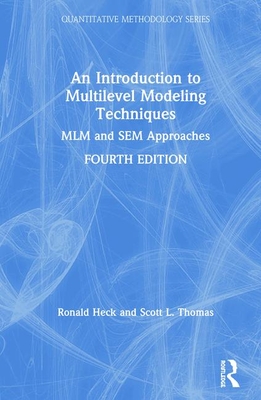
An Introduction to Multilevel Modeling Techniques (Quantitative Methodology Series)
by Ronald H. Heck
Sponsored
Synopsis
Multilevel modelling is a data analysis method that is frequently used to investigate hierarchal data structures in educational, behavioural, health, and social sciences disciplines. Multilevel data analysis exploits data structures that cannot be adequately investigated using single-level analytic ...
Multilevel modelling is a data analysis method that is frequently used to investigate hierarchal data structures in educational, behavioural, health, and social sciences disciplines. Multilevel data analysis exploits data structures that cannot be adequately investigated using single-level analytic methods such as multiple regression, path analysis, and structural modelling. This text offers a comprehensive treatment of multilevel models for univariate and multivariate outcomes. It explores their similarities and differences and demonstrates why one model may be more appropriate than another, given the research objectives.
New to this edition:
An expanded focus on the nature of different types of multilevel data structures (e.g., cross-section, longitudinal, cross-classified, etc.) for addressing specific research goals
Varied modelling methods for examining longitudinal data including random-effect and fixed-effect approaches
Expanded coverage illustrating different model-building sequences and how to use results to identify possible model improvements
An expanded set of applied examples used throughout the text
Use of four different software packages (i.e., Mplus, R, SPSS, Stata), with selected examples of model-building input files included in the chapter appendices and a more complete set of files available online
This is an ideal text for graduate courses on multilevel, longitudinal, latent variable modelling, multivariate statistics, or advanced quantitative techniques taught in psychology, business, education, health, and sociology. Recommended prerequisites are introductory univariate and multivariate statistics.
New to this edition:
An expanded focus on the nature of different types of multilevel data structures (e.g., cross-section, longitudinal, cross-classified, etc.) for addressing specific research goals
Varied modelling methods for examining longitudinal data including random-effect and fixed-effect approaches
Expanded coverage illustrating different model-building sequences and how to use results to identify possible model improvements
An expanded set of applied examples used throughout the text
Use of four different software packages (i.e., Mplus, R, SPSS, Stata), with selected examples of model-building input files included in the chapter appendices and a more complete set of files available online
This is an ideal text for graduate courses on multilevel, longitudinal, latent variable modelling, multivariate statistics, or advanced quantitative techniques taught in psychology, business, education, health, and sociology. Recommended prerequisites are introductory univariate and multivariate statistics.
You May Also Like

Spell Freedom: The Underground Schools That Built the Civil Rights Movement
Elaine Weiss

Whisper Sweet Nothings
Laura Pavlov

Out of the Silent Planet (Space Trilogy, #1)
C.S. Lewis

The Sailor Who Fell from Grace with the Sea
Yukio Mishima

The Professor's Copy
Cassi Hart

The Origins and History of Consciousness
Erich Neumann
Business Picks
View All
Mood Machine: The Rise of Spotify and the Costs of the Perfect Playlist
Liz Pelly

Quit: The Power of Knowing When to Walk Away
Annie Duke

Think Again: The Power of Knowing What You Don't Know
Adam M. Grant

From Strength to Strength: Finding Success, Happiness, and Deep Purpose in the Second Half of Life
Arthur C. Brooks

Source Code: My Beginnings
Bill Gates

Financial Feminist: Overcome the Patriarchy's Bullsh*t to Master Your Money and Build a Life You Love
Tori Dunlap
