1
0
Support the library.
Your support helps keep books free for everyone ❤️
📍 Noticed
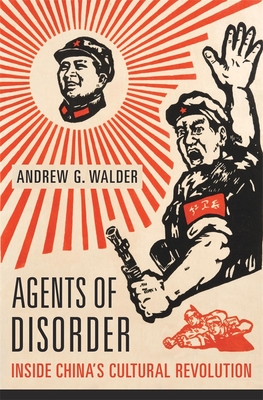
Agents of Disorder: Inside China’s Cultural Revolution
by Andrew G. Walder
Sponsored
Synopsis
Why did the Chinese party state collapse so quickly after the onset of the Cultural Revolution? The award-winning author of China Under Mao offers a surprising answer that holds a powerful implicit warning for today's governments.By May 1966, just seventeen years after its ...
Why did the Chinese party state collapse so quickly after the onset of the Cultural Revolution? The award-winning author of China Under Mao offers a surprising answer that holds a powerful implicit warning for today's governments.
By May 1966, just seventeen years after its founding, the People's Republic of China had become one of the most powerfully centralized states in modern history. But that summer everything changed. Mao Zedong called for students to attack intellectuals and officials who allegedly lacked commitment to revolutionary principles. Rebels responded by toppling local governments across the country, ushering in nearly two years of conflict that in places came close to civil war and resulted in nearly 1.6 million dead.
How and why did the party state collapse so rapidly? Standard accounts depict a revolution instigated from the top down and escalated from the bottom up. In this pathbreaking reconsideration of the origins and trajectory of the Cultural Revolution, Andrew Walder offers a startling new conclusion: party cadres seized power from their superiors, setting off a chain reaction of violence, intensified by a mishandled army intervention. This inside-out dynamic explains how virulent factions formed, why the conflict escalated, and why the repression that ended the disorder was so much worse than the violence it was meant to contain.
Based on over 2,000 local annals chronicling some 34,000 revolutionary episodes across China, Agents of Disorder offers an original interpretation of familiar but complex events and suggests a broader lesson for our times: forces of order that we count on to stanch violence can instead generate devastating bloodshed.
By May 1966, just seventeen years after its founding, the People's Republic of China had become one of the most powerfully centralized states in modern history. But that summer everything changed. Mao Zedong called for students to attack intellectuals and officials who allegedly lacked commitment to revolutionary principles. Rebels responded by toppling local governments across the country, ushering in nearly two years of conflict that in places came close to civil war and resulted in nearly 1.6 million dead.
How and why did the party state collapse so rapidly? Standard accounts depict a revolution instigated from the top down and escalated from the bottom up. In this pathbreaking reconsideration of the origins and trajectory of the Cultural Revolution, Andrew Walder offers a startling new conclusion: party cadres seized power from their superiors, setting off a chain reaction of violence, intensified by a mishandled army intervention. This inside-out dynamic explains how virulent factions formed, why the conflict escalated, and why the repression that ended the disorder was so much worse than the violence it was meant to contain.
Based on over 2,000 local annals chronicling some 34,000 revolutionary episodes across China, Agents of Disorder offers an original interpretation of familiar but complex events and suggests a broader lesson for our times: forces of order that we count on to stanch violence can instead generate devastating bloodshed.
You May Also Like

The Thinking Machine: Jensen Huang, Nvidia, and the World's Most Coveted Microchip
Stephen Witt

Wiseguy: Life in a Mafia Family
Nicholas Pileggi

Cross the Line
S. Massery

Weave World
Clive Barker

I'm the Heroic Knight of an Intergalactic Empire! (Light Novel) Vol. 4
Yomu Mishima

Model Home
Rivers Solomon
Self Help Picks
View All
I Hope You Remember: Poems on Loving, Longing, and Living
Josie Balka
The 5 Types of Wealth: A Transformative Guide to Design Your Dream Life
Sahil Bloom
Unreasonable Hospitality: The Remarkable Power of Giving People More Than They Expect
Will Guidara

Atlas of the Heart: Mapping Meaningful Connection and the Language of Human Experience
Brené Brown

Dear Dolly
Dolly Alderton

Simply More: A Book for Anyone Who Has Been Told They're Too Much
Cynthia Erivo
